Is BlockDAG Staking V2 Live Yet? What Holders Need to Know Today
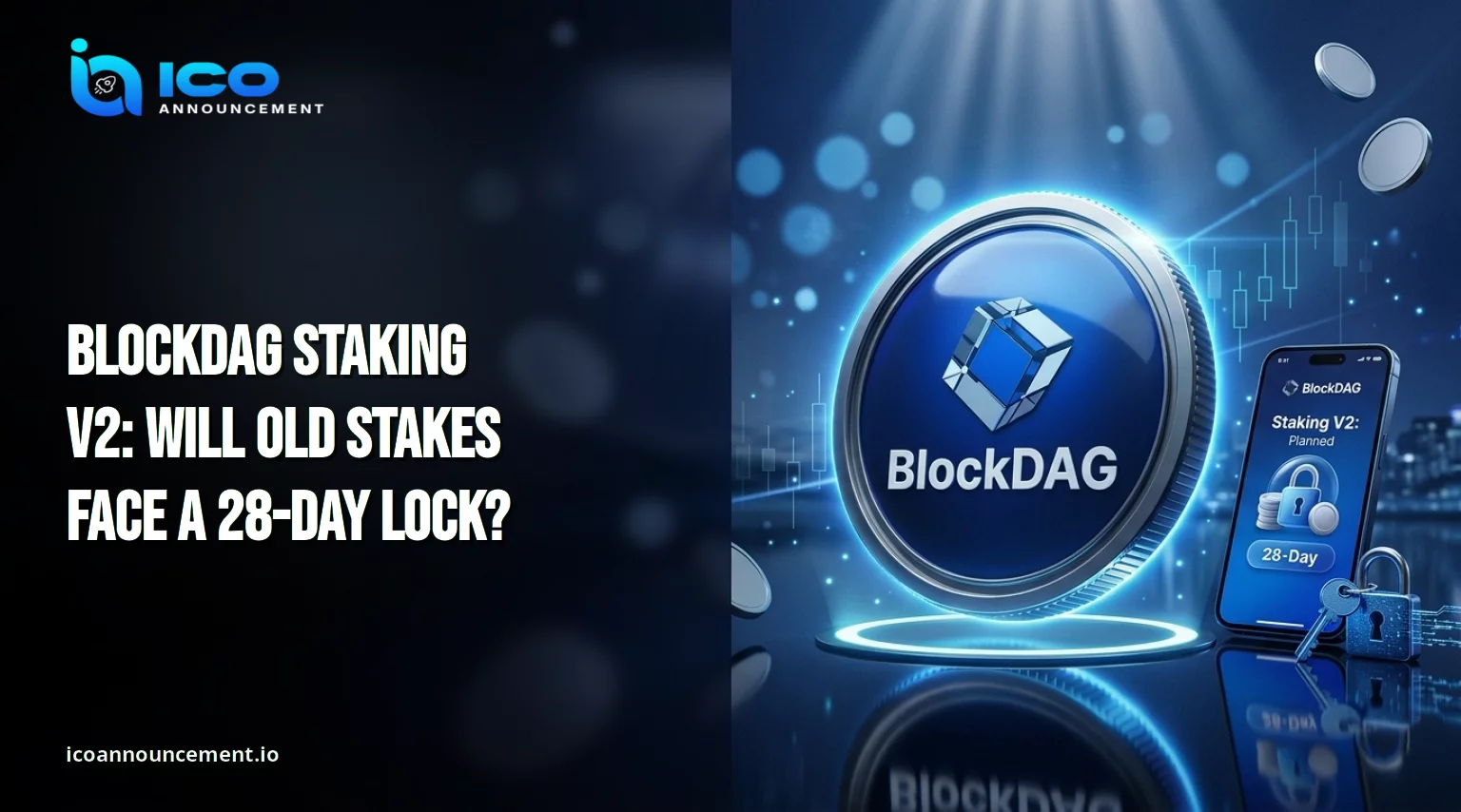
BlockDAG Staking V2 is a planned upgrade, not a confirmed live feature. A community guide describes a fresh 28-day bonding period, a separate route for legacy withdrawals and voting rights tied to earned rewards, but it says final launch details are still pending.
Until the project publishes official terms, nobody should assume old BDAG stakes face a new lock.
This article separates what is confirmed, proposed, and unverified, so holders know what to check before moving funds. It is written for existing holders who want a clear picture without hype.
Is BlockDAG Staking V2 Live Yet? What Holders Need to Know Today
No official announcement reviewed for this article confirms that the upgrade has launched. Is BlockDAG Staking V2 live? Not on the evidence available.
The project already describes epoch-based rewards on its own pages, so basic participation is confirmed, and you can read the official staking information yourself. The newer details come from an independent community resource that labels them as planned, which is why the distinction below matters.
Check the date on any post, because older community notes can describe plans that have since changed. Use this filter whenever you read an update:
Confirmed: staking exists and rewards run by epoch.
Proposed: a fresh bonding period, legacy withdrawals, and reward-linked voting.
Unverified: launch date, migration steps, and final contract addresses.
BDAG V1 vs V2: Will Existing Positions Transfer Automatically?
The community write-up on proposed Staking V2 mechanics suggests two separate contracts. If that holds, what happens to old BDAG staking positions may depend on a manual step by each holder, and BlockDAG staking migration details are not final.
Holders should not move anything until official instructions appear, and final release notes may still change the details. The table shows BDAG V1 vs V2 as currently described.
Why Does the Proposal Mention a 28-Day Lock Period for Stakers?
The figure comes from a proposed four-epoch bonding period. If one epoch lasts seven days, four epochs add up to 28 days. Does BDAG Staking V2 have a 28-day lock? The proposal says so for new deposits, but nothing confirms that old positions would face the same wait.
Our BDAG staking rewards guide explains how claim timing works today, so you can compare it with any official notice instead of mixing the rules of two versions.
Ask whether the wait applies to principal, rewards, or both. A longer wait also means funds stay unavailable for longer, which is a real cost to weigh.
Can Earned Rewards Give Holders DAO Voting Power in the Upgrade?
According to the community guide, the proposal links voting rights to eligible rewards rather than to wallet balance.
How does BlockDAG DAO voting work in that model? Rewards earned by locked deposits could set BDAG voting power inside a BlockDAG DAO, a kind of decentralized autonomous organization. This is a community governance idea, not a live feature.
No official source reviewed publishes voting weights, quorum rules, or proposal types, so treat any promise of guaranteed influence as unverified. Ask who counts the votes and where. Look for a published specification before drawing conclusions.
Does Holding BDAG Give You Voting Rights or Only Earned Rewards?
Three things are easy to confuse: wallet balance, deposited principal, and reward eligibility. Under the proposal, simply holding coins would not create on-chain voting weight.
The principal would sit in the staking contract, and earned rewards would be the part tied to BDAG governance. Whatever happens, keep your keys safe and use a secure BDAG wallet for every interaction with a contract.
Never share a seed phrase with anyone offering early access, however official their message looks. Check each definition against official documentation before relying on it.
How Would Unstaking, Unbonding, and Withdrawals Work After the Upgrade?
The guide describes a request to withdraw, a waiting period, and then a claim step. How does the BDAG unbonding period work? It follows the usual unstaking process in bonded systems, where funds stay locked until the BlockDAG unbonding period ends.
Legacy withdrawals are described as separate from the new contract, and no official timing has been published. After each step, track BDAG transactions on the explorer and confirm the hash.
A withdrawal is not finished until the transfer appears on-chain, so keep the transaction ID until it does. Screenshots of dashboards are not proof of completion.
Who Controls BlockDAG Network Upgrades: Miners or Token Stakers?
BlockDAG uses proof of work, so miners secure the chain today. The community idea adds staker governance, where reward-linked voters could weigh in on a BlockDAG network upgrade.
Can BDAG holders vote on network upgrades? Only if such a system ships, and the balance between miner voting and staker votes is unpublished. Real network participation matters too, and data on BlockDAG network activity shows how many active users exist before any vote carries weight.
A mainnet upgrade decided by few participants would be a weak signal, because turnout, not theory, decides legitimacy. That is why verification matters more than headlines.
What Should Holders Verify Before Moving Funds to the New Version?
Run a short checklist before moving funds:
Confirm the launch on the project’s own channels.
Check the contract address on the explorer.
Note the bonding period and withdrawal rules in writing.
Ignore direct messages offering early access.
Start by learning to verify the BDAG contract so a fake page cannot reuse a real-looking address. Any official page should match what the explorer shows, not only a link someone sent you. Treat legacy staking funds with the same caution.
Disclaimer: This article is for information only and is not financial advice. The details described here are proposed and may change. Crypto assets carry risk, including loss of funds. Do your own research and rely on official BlockDAG announcements before acting.