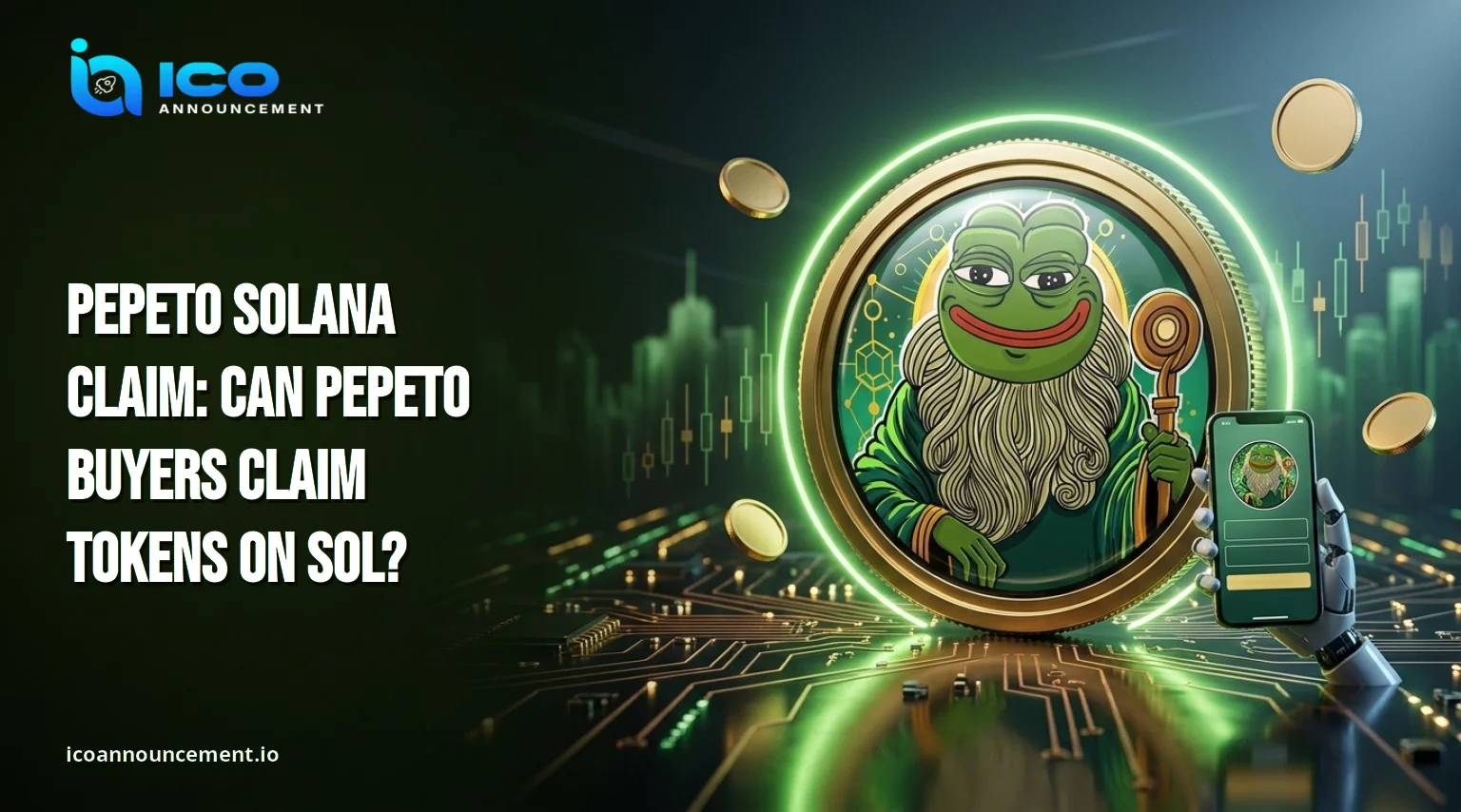
Pepeto Solana Claim Explained: ETH, BNB Chain, and SOL Routes Compared
The Pepeto Solana claim question comes down to one gap. The project describes a three-network bridge, yet its presale FAQ names only two destinations for purchased tokens. Those are separate functions.
A bridge moves supported assets between networks. A distribution step sends a buyer's allocation to a wallet. One statement does not confirm the other.
Per the project's site, buyers who paid with ETH, USDT, or a card receive tokens on Ethereum. BNB buyers receive them on the BNB chain.
Solana is not named as a destination for presale tokens. Treat that gap as meaningful until a fuller guide appears.
Key Takeaways
- The bridge lists three networks, but the FAQ names two for receiving presale tokens.
- ETH, USDT, and card buyers use Ethereum. BNB buyers use BNB Chain.
- No third-chain route is listed for presale tokens.
- A published route is not proof that a live transfer works today.
- Confirm every page, wallet prompt, and contract before signing anything.
Does the Project Support Ethereum, BNB Chain and Solana for Every Use?
The project's website shows Ethereum, BNB Chain and Solana inside its cross-chain design. It describes a lock-and-mint model. Assets are locked on the source side.
An equal amount is then created or released at the destination. That is the team's own description of the intended design. It is not independent proof that every route is open to the public.
The presale FAQ is narrower. It names Ethereum and BNB Chain only. Readers should not assume that each feature uses all three chains in the same way.
For the proposed transfer model in detail, read the Pepeto Bridge guide.
Which Network Will Presale Buyers Use When the Claim Window Opens?
According to the official FAQ, the receiving network follows the payment method used in the sale.
This is the clearest answer in the published instructions. A USDT buyer should not switch to BNB Chain because the ecosystem also mentions BNB. In the same way, bridge materials alone do not create a destination for presale tokens.
The FAQ also says distribution starts after the sale ends. Staked tokens and staking rewards unlock at the same time. It gives no separate procedure, deadline, or network-switching steps.
The wider process sits in the PEPETO token claim guide.
Why Does the Project List Solana for Its Bridge but Not Token Claims?
A bridge and a token distribution solve different problems. A bridge transfers supported assets from one network to another.
A presale distribution delivers tokens to eligible buyer wallets once the project opens that process.
So a project can describe a three-network bridge and still name two for presale tokens. That does not prove support will never come.
It means the current FAQ does not confirm that route. The answer must come from the FAQ, not from the bridge section.
The team should state whether Solana applies to the token itself, to other bridged assets, or to a later phase. Until then, keep planned multi-chain features apart from the documented instructions.
Check the wording yourself on the Pepeto official website.
Can You Move Claimed PEPETO to Solana Through the Project's Bridge?
A published route description does not prove a live transfer exists today. Before moving anything, look for a working transfer interface, supported token details, verified contract addresses, route instructions, and completed transactions.
Never send tokens to a random address. Do not use a contract copied from an unfamiliar page. Confirm that the tool supports the exact asset and destination first. If it is not publicly live, wait for a clear announcement instead of testing with valuable tokens.
Your purchase route also shapes which network you land on. Compare the options in this explainer on Pepeto payment methods.
What Should Buyers Verify Before Connecting a Wallet or Claiming?
Run a short checklist before signing any wallet request:
- Open the site only from a link posted by the project's official account.
- Match the network to the payment method named in the FAQ.
- Confirm the connected wallet is the one used for the purchase.
- Read each prompt. A genuine page never asks for a seed phrase or private key.
- Verify the token contract and network before adding an asset or sending funds.
- If the wallet will not connect, do not jump to a replacement site. Confirm the domain first.
- Check whether the final transaction needs the network's native gas token. The FAQ gives no fixed gas estimate.
A real page should show the network, eligible wallet, token contract, and transaction details. A countdown, a logo, or a live label proves nothing by itself. If a Pepeto Solana claim page asks for a signature, treat it as suspect.
Use the PEPETO contract verification guide for the contract step.
What the Project's Current Network Details Still Do Not Confirm
The FAQ says which chain applies to each payment method. Several operational details are still missing.
In the material reviewed, there is no Solana presale path, no per-chain distribution contract, no live transaction reference, and no route-by-route token list.
Missing details do not mean the features will never arrive. They mean buyers should wait before treating them as available.
Strong confirmation would be a dated announcement, matching contract addresses on the relevant explorers and a working transaction anyone can check.
Dated updates appear on the official Pepeto X account.
Final Takeaway: Is a Pepeto Solana Claim Available Right Now?
The published instructions name Ethereum for ETH and USDT and Card Buyers and BNB Chain for BNB buyers. Solana appears in the bridge description, not in the presale list. A direct Pepeto Solana claim is therefore not confirmed by the current FAQ.
Keep bridge support and distribution eligibility separate. Verify wallet and contract details. Avoid signing anything on pages that official channels do not link. This matters most when a project spans several chains.
If a wallet fails to connect, try these wallet connection fixes.
Disclaimer
This article is for information only. It is not financial, investment, legal, or tax advice, and it does not recommend buying, selling, or holding any token. Network support and distribution steps can change without notice. The details here reflect the project's published materials at the time of writing and were not tested on-chain by the author. Crypto transactions are usually irreversible. Funds can be lost through the wrong network, a fake page, or an unsafe approval. Check every detail with the project's official channels and do your own research before connecting a wallet or signing any transaction.