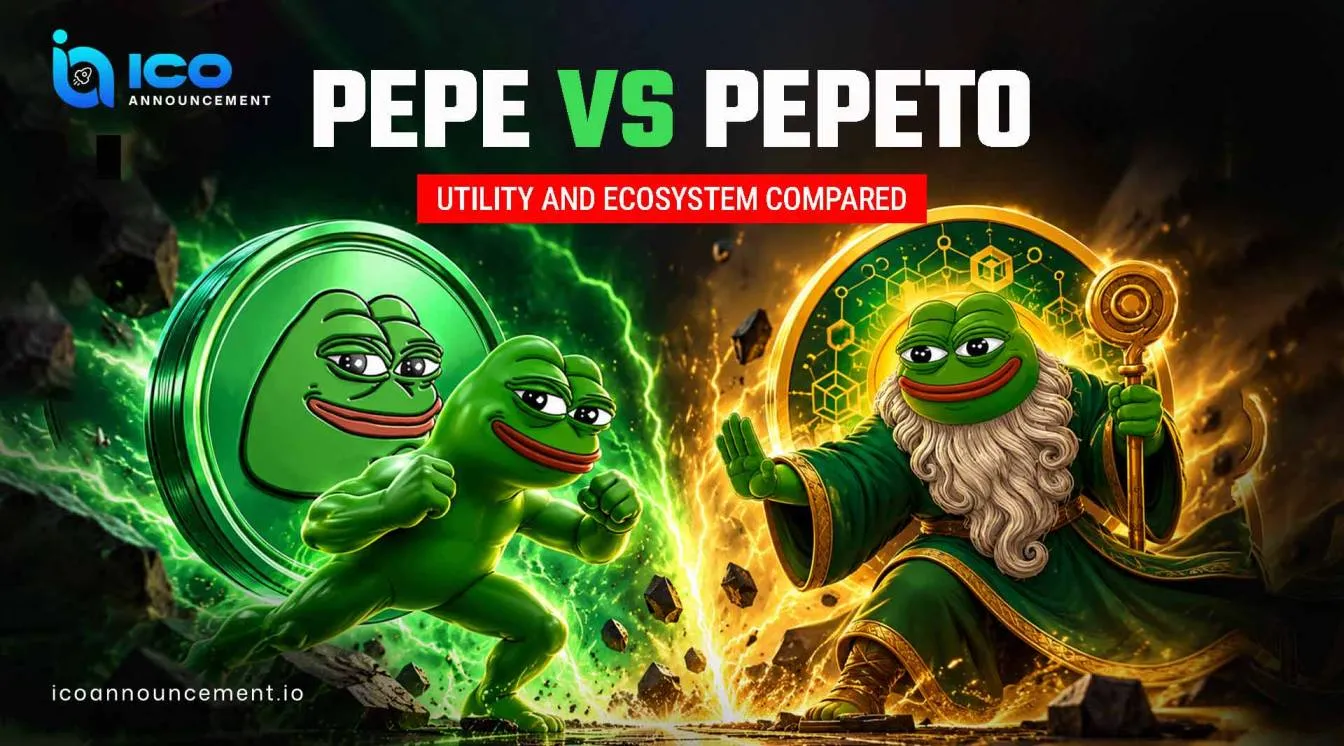
Pepeto vs PEPE: Which Meme Coin Has Real Utility? Facts to Check
Pepeto vs PEPE is a popular search, and the short answer is clear. These are two separate crypto assets.
Each has its own ecosystem, utility and token structure. The names look alike, and that causes confusion.
PEPE is an established frog-themed meme coin on Ethereum. The newer Pepeto coin presents itself as a meme coin ecosystem with an exchange, a bridge and staking.
This guide compares both, separates official claims from verified facts, and ends with safety checks.
Key Takeaways
The two coins are separate assets with different goals.
The older coin is a pure meme asset. The newer project states that it will add exchange, bridge and staking tools.
Many stated features are plans, not independently proven products.
Supply differs: 420 trillion in the whitepaper versus 420.69 trillion for the older coin.
Always verify the contract address before you interact with any token.
Pepeto vs PEPE: What Is the Main Difference Between the Two?
PEPE launched in 2023 as an Ethereum token built on the Pepe the Frog meme. It is mainly a community and culture asset. It has no product suite attached to it.
The newer project uses a similar frog theme but positions itself differently. Its whitepaper describes a bridge, an exchange and staking.
The same document tells a story in which the project rivals its older namesake. That story is marketing language. It is not proof of better technology.
So what is the difference between Pepeto and PEPE? One is an established meme coin with a long public trading history.
The other is a younger project whose features must be judged as they ship.
Readers who ask how Pepeto is different from PEPE should start with that gap between history and promises.
For the exchange side, see how PepetoSwap works.
PEPE vs Pepeto Utility: How Do the Two Ecosystems Compare Today?
Utility is where the two assets part ways. The older coin leans on culture and community interest.
The newer token leans on a planned set of tools. Meme coin utility is rare, so the table below shows the main points.
The project describes its tools as its edge. Those are claims until each product is live and checked.
A fair Pepeto vs PEPE utility comparison rests on what users can test today, not on what a roadmap promises.
It also helps to ask which tools a holder could use right now and which ones still sit on a plan.
To see how the cross-chain piece is meant to work, read the bridge guide.
How PepetoSwap, Bridge and AI Screening Fit Into the PEPETO Ecosystem
The project states that three tools should work together. PepetoSwap is the planned exchange for meme tokens.
The bridge is meant to link meme coins across different chains. AI screening is described as a way to check tokens before trading.
The whitepaper confirms the exchange and the bridge as core features. It places a bridge and exchange test launch in its third roadmap phase.
It also says the exchange launch follows in that phase.
The idea is simple. Screening would help users judge a token. The bridge would move it between chains.
The exchange would let them trade it. That chain of tools is the ecosystem pitch.
None of this proves a live product. Treat every feature as a stated goal until you can use it yourself.
Compare what the interface does with what the documents say.
Official details appear on the official project website.
PEPETO Token Utility: What Is the Token Actually Used For Today?
So what is PEPETO used for? The white paper names staking as a core feature. Holders can stake tokens and earn rewards, according to the document.
It reserves 30% of the total supply for staking rewards. It also frames the token as the centre of the exchange and bridge ecosystem.
The older coin has no comparable stated function. Its value comes from community interest and trading activity.
Staking rewards are never guaranteed income. Rates, lock rules and launch timing should come from official sources only.
This section covers the comparison. For the mechanics, see the staking rewards guide.
PEPE vs Pepeto Tokenomics: Why Supply and Distribution Matter
Supply and allocation shape how a token trades. The whitepaper lists a total supply of 420 trillion.
It assigns 30% to the presale, 30% to staking, 20% to marketing, 12.5% to liquidity and 7.5% to development. The older coin has a supply of 420.69 trillion.
Large insider allocations can add selling pressure. Thin liquidity can widen price swings.
Check how many tokens are truly in circulation and who holds them. Apply the same questions to every meme coin you research.
The full tokenomics breakdown goes deeper.
Is Pepeto the Same as PEPE? Contract and Safety Checks to Run
No. They are separate assets with separate contracts. A name or ticker proves nothing.
Scammers copy popular names, so fake tokens are common.
Run these checks before any transaction:
Confirm the correct blockchain network.
Copy the contract address only from official project channels.
Open it on a block explorer and review the holder data.
Compare the token name, symbol and supply with official sources.
Ignore links from direct messages and paid ads.
Use this guide to verify the contract address.
Which One Fits Your Research? A Neutral Pepeto vs PEPE Checklist
Use a simple framework. Compare community focus, ecosystem utility, exchange functionality and cross-chain features.
Then compare supply, liquidity, product availability and contract verification. Finish with risk factors.
The older coin offers history and community reach. The newer project offers stated utility, but much of it still needs proof.
Pepeto vs PEPE, which is better, has no single answer. It depends on what you want to research, and both carry real risk.
Read the project whitepaper and match each claim against live products. Then do your own research before any decision.
Disclaimer: This article is for information only. It is not financial advice. Crypto assets are volatile, and you can lose money.