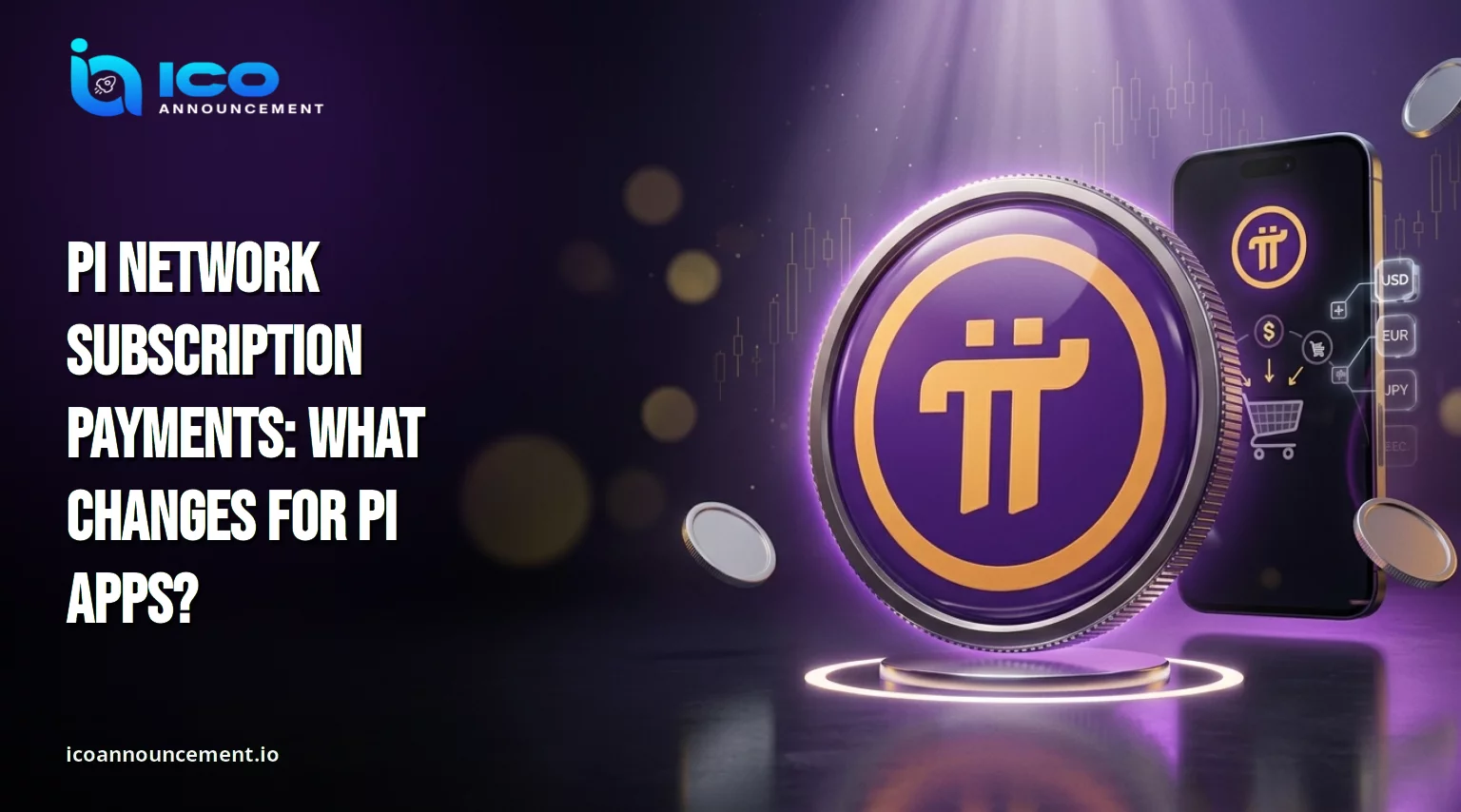
Pi Subscription Contract: Recurring PI Billing, Apps, and Mainnet Gap
The November Ecosystem Summit showed a working contract for recurring charges, and the obvious question followed: can apps now bill users every month? Pi Network subscription payments are real, but they exist only on the test network today.
This guide explains how the flow works, who controls the coins, and what holders should not assume before an official Mainnet release.
Key Takeaways
- Recurring billing runs on the testnet only, and no mainnet launch date has been confirmed.
- A subscriber approves a spending allowance once, and funds stay in the wallet until a charge is processed.
- Merchants must call the processing function to collect each renewal, so nothing happens by itself.
- Subscribers can cancel, and the Testnet v1 approval is capped at roughly 180 days.
- Gaming, streaming, or membership ideas are possibilities, not confirmed integrations.
Why Is Pi Network Subscription Payments Trending After the November Summit?
The three-day online summit ran from November 17 to 19, 2026, and Day 1 centered on developer tools. The recurring-billing contract was demonstrated beside the new Developer Web Console and AI-assisted building tools, which explains the search spike.
The topic matters because most blockchains ask for a fresh approval every time money moves. Removing that friction is what could make everyday digital services practical on the network, and it gives builders a clearer monetization path than one-off transfers.
The announcement itself is here:
How Does the Subscription Smart Contract Actually Work?
The flow has three parts. A merchant registers a service with a price and a billing period. A subscriber then authorizes a defined budget inside the wallet. Finally, the merchant triggers each charge when a period ends.
Because the contract moves only what the subscriber approved, a merchant cannot pull more than the agreed limit. Think of it as on-chain billing with a built-in spending cap and a visible end date.
The public review happens there. Developers can test the logic, report bugs and suggest improvements through the public Request for Comment process, while an external review of the contract was also reported by the team.
The groundwork behind this feature is covered here:
Can Apps Charge Monthly Fees Without Repeated Wallet Approvals?
Yes, within the approved allowance. The subscriber signs once, and later renewals do not need a new signature each month. That is the core difference between recurring billing and a one-time transfer, where every payment needs its own confirmation.
The merchant side still has work to do. Renewals are collected only when the merchant calls the processing function, so a missed call means a missed charge. Developers should plan for reminders, retries, and clear failure messages.
Users should also remember that a plan stays active only while the wallet holds enough balance on the due date. An empty wallet simply means the charge cannot be collected.
For the wider picture of live payments today, read:
PI payments and Mainnet app utility
Does the Contract Keep Your Coins in Your Wallet?
According to the official documentation, yes. The allowance is permission, not a deposit. Coins stay with the subscriber until a charge is actually processed, so approving a plan does not lock or move anything on day one.
Cancellation is supported and ends future charges. On Testnet v1, the approval has a maximum period of about 180 days, so a longer plan would need fresh consent. Always check the amount, the billing period, and the end date on the approval screen before you sign.
In practice, wallet control stays with the subscriber at every step. The merchant can only collect what was approved, and the subscriber can stop the plan whenever the terms no longer make sense.
Which Apps Could Benefit From Recurring Billing?
Possible fits include gaming memberships, premium digital services, streaming, online tools, and e-commerce. These are use cases the technology could support.
None is a confirmed integration, and no app has announced recurring billing on the live network.
Creators who want to be ready can start with the builder tools, which already handle in-app purchases for qualifying projects:
Build applications using Pi App Studio
Is Pi Network Subscription Payment Live on Mainnet Yet?
No. The current implementation runs on the test network, which uses test tokens. The documentation says the Testnet v1 contract will be replaced before Mainnet deployment, and no launch date has been published.
So holders should not assume that any app can charge real coins monthly today. Treat any page claiming otherwise as unverified, and never share your passphrase to "activate" a plan. Do not treat a demo as proof of live payments.
Developers can follow the technical details and testnet status here:
official subscription announcement
Could Recurring Billing Change the Future of the Ecosystem?
Possibly, though only if apps adopt it. Recurring billing could help creators earn steady income, keep users returning, and give builders a reason to ship paid products. Those effects are possibilities, and this article makes no price promise.
Visibility will matter too, since users must find apps worth paying for. The redesigned directory is one route:
Discover Pi ecosystem applications
What Support Exists for Builders Waiting on Mainnet?
Builders are not left alone while the contract matures. A separate marketing budget of up to 20 million coins was announced for eligible projects, though reward rules are not final and nothing is guaranteed.
Details and caveats are covered here:
For now, Pi Network subscription payments are a Testnet feature to learn, test and watch. Wait for an official release before relying on them.
Disclaimer
This article is for general information only and is not financial, investment, tax, or legal advice. Crypto assets are volatile, and features, timelines, and eligibility rules can change without notice. Do your own research and verify details through official channels before approving any payment.