Remittix RTX Burn Explained: Will the 20% Supply Cut Matter?
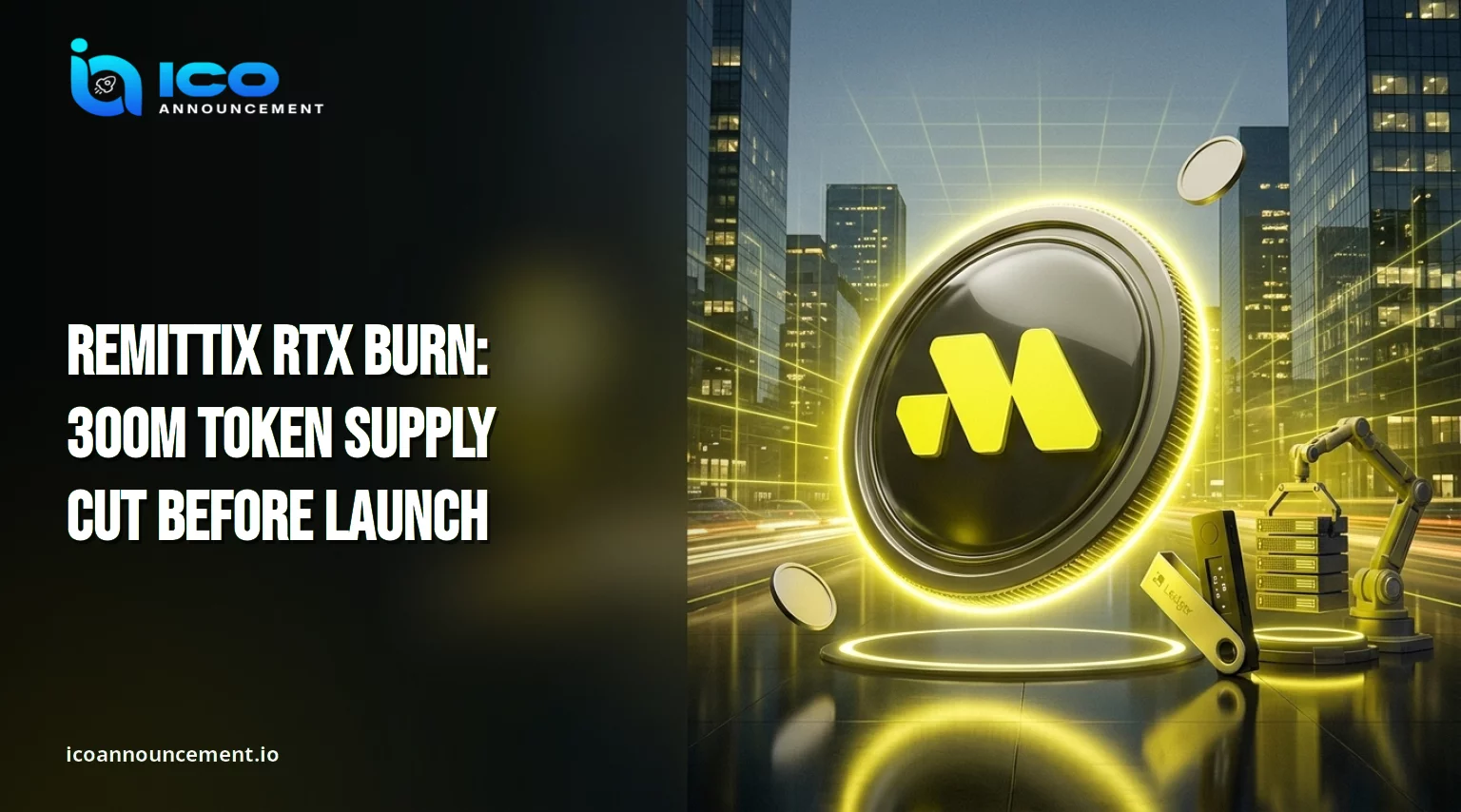
The Remittix RTX burn is the biggest tokenomics story ahead of the scheduled November 24 launch.
On October 23, 2026, the project said 300 million RTX would be destroyed for good at launch, which it calls 20% of the original total.
That is a clear headline number. It is also an announcement, not a finished event.
This guide explains the 300 million RTX burn, what it could change, what remains unclear, and how readers can check the result on-chain.
Key Takeaways
- The announced cut is 300 million tokens, or 20% of a 1.5 billion supply.
- Supply would fall to 1.2 billion if the plan is carried out as stated.
- The project has not said which allocation the destroyed tokens come from.
- A genuine removal leaves a transaction hash and a lower total on a blockchain explorer.
- Fewer coins in existence do not guarantee stronger demand or a higher price.
Remittix Token Burn: What Did the October 23 Announcement Say?
Remittix said 300 million RTX will be burned at launch, tied to the November 24 start of public trading.
The release puts the original total at 1.5 billion, so the cut equals one fifth and would leave 1.2 billion.
It also says more than 40,000 participants had contributed $33 million toward a $36 million hard cap.
The project's own wording is in the October 23 burn announcement.
Treat it as a statement of intent. A press release does not prove that anything has been destroyed, and the page names no transaction and no burn address.
What Could a 20% RTX Supply Reduction Mean for Tokenomics?
Burning sends units to an address nobody controls, which removes them from the total token supply for good. The arithmetic is simple.
Taking 300 million from 1.5 billion leaves 1.2 billion, and each remaining unit then represents a 25% larger share of the whole.
That changes ownership share, not what the project earns.
Total supply is not circulating supply. Circulating supply is what can actually trade, and it depends on unlock rules and wallet holdings.
A smaller float can tighten a market, but demand and depth decide what happens next.
For earlier context on the sale, see this presale progress update covering the fixed supply and the contract details.
Will the 300M Cut Come From Unsold Presale Tokens or Reserves?
This is the least clear part of the plan. Project allocation records split the 1.5 billion units into presale at 50%, marketing at 15%, exchange listings at 12%, ecosystem reserves at 10%, team at 9%, and rewards at 4%.
Documentation has also described a conditional removal if unsold presale tokens remain.
The October release does not say whether the 300 million comes from that pool, from reserves, or from somewhere else.
The sale terms and full split are listed on the presale allocation page.
Until the source is named, nobody can say whose holdings shrink. Each answer changes who actually owns fewer tokens afterwards.
RTX Buyback and Burn: How Are the Two Supply Plans Different?
A burn deletes tokens that already exist. A buyback mechanism works the other way: the project spends money to buy tokens on the market, then holds or destroys them.
The size of a burn is fixed in advance. A buyback depends on revenue, timing, and price, so its effect is harder to predict.
The October release describes one launch event and gives no buyback formula, no revenue share, and no schedule.
If later posts mention ecosystem-funded buybacks, look for the funding source, the buying frequency, and where the purchased coins are sent.
Supply, vesting, and contract details are in the official token documentation, which at the time of writing does not mention the 300 million plan.
On-Chain Verification: How Can Readers Confirm the Cut Happened?
Start with the token contract. Confirm the address in the project's official documentation, which lists 0xe7654694ec16F3163084eC559193e10c7ABA17CB on Ethereum, then open it on a blockchain explorer.
Look for a transaction hash that sends 300 million units to a dead address or calls a burn function.
Compare the total before and after. A real removal lowers it to about 1.2 billion.
Coins sent to an ordinary wallet are only moved, and they can return to the market.
To avoid a lookalike, use this guide to the RTX contract address before checking anything else.
Before the RTX November 24 Launch: What Should Holders Check?
Check token distribution records first. Presale buyers are told their holdings become claimable from the dashboard five days after launch, with no vesting, while team allocations vest over three years.
That timing matters because a cut does not change how quickly early buyers can act.
Next, confirm exchange notices and circulating figures from official channels only. Never connect a wallet through a link sent in a message.
Claim steps are covered in this RTX claim guide.
Which Remittix Tokenomics Details Are Still Missing in Public Docs?
Four gaps remain. The source of the 300 million is unnamed. It is unclear whether the allocation records will be updated.
No buyback calculation is disclosed. And nothing promises that the transaction will be published. Whether any treasury allocation funds future removals is also open.
Market liquidity matters as well. Once trading starts, depth on each venue shapes how a supply change plays out.
Venue and pair details are collected in this guide to RTX trading venues.
Remittix RTX Burn: What Readers Should Watch After Launch
The Remittix RTX burn gives November 24 a clear scarcity story, but a story is not proof.
The announced figures are 300 million tokens, a 20% cut, and 1.2 billion remaining. What counts after launch is a transaction hash, a lower total on the explorer, and a plain answer on which allocation it came from.
Those points describe Remittix tokenomics better than any headline. Until then, the plan is an intention with a date attached.
Disclaimer
This article is for information only and is not financial, investment, legal, or tax advice. Crypto assets are volatile, and you can lose all the money you put in. Figures and dates come from the project's own statements and have not been independently verified. Nothing here predicts a price or recommends buying, selling, or holding any token. Do your own research, check every contract, address yourself, and speak to a licensed adviser before you decide.