Can the Remittix Earn APY Change After You Deposit Your Funds?
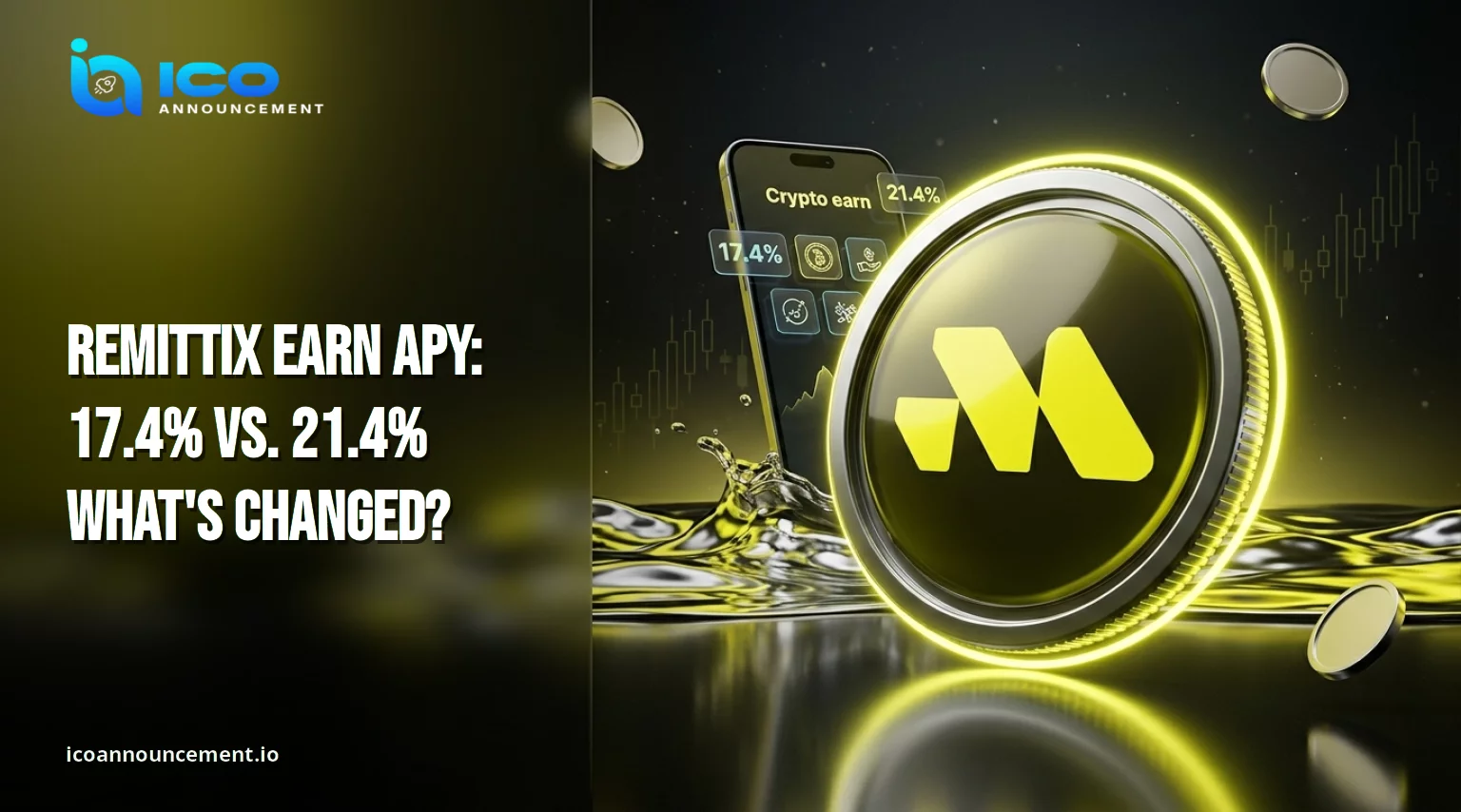
The Remittix Earn APY now appears as two different numbers. The official launch release on November 6 advertised up to 21.4%, while the November 9 public-access post on the official X account advertised up to 17.4%.
The short answer: both are “up to” figures, and the higher one seems tied to eligible RTX holders, a condition the primary announcements do not fully explain.
This guide separates what is confirmed from what is only claimed, so you know what to verify before depositing.
Why Do Public Rates Show Both 17.4% and 21.4% on Remittix Earn?
The official November 6 release said the platform offers up to 21.4% across supported options, with weekly payouts on ETH, USDT, and USDC. Three days later, the official X account announced public access and led with up to 17.4%.
The simplest reading is two tiers. Later promotional coverage of the public launch says standard options advertise up to 17.4%, while eligible RTX holders can reach 21.4% on qualifying options.
That is a project-side claim, not a verified rule, and the announcements do not fully explain the difference.
Pre-launch messaging was different again. The October test phase targeted 18% to 22%, which our previous Remittix Earn offer guide covers, so compare those early targets with live terms instead of assuming they still apply.
Is 21.4% APY Open to Everyone or Limited to Eligible RTX Holders?
Public access and the top rate are not the same thing. The November 9 post on the official Remittix X account says Earn is open to everyone, but the headline figure it uses is 17.4%.
On the evidence available, the 21.4% tier looks conditional. The November 6 release calls it the top rate across supported options and says pool terms set the offer for a specific deposit. It does not say every depositor qualifies.
Inside the product, look for three things: the rate shown for your exact asset, any holder requirement, and whether that rate is labelled as a maximum. If the screen shows the lower figure, plan around it.
ETH, USDT, or USDC: Which Coins Can You Deposit on the Platform?
Both announcements name the same three Remittix-supported coins: ETH, USDT, and USDC. ETH deposits keep your exposure to Ether’s price, so the dollar value of your position moves even while rewards arrive.
USDT yield and USDC yield come from dollar-pegged stablecoins, which removes ETH price swings but adds stablecoin risk.
Check the network for each deposit before sending anything, because the right asset on the wrong chain can be lost. The announcements do not list networks, so confirm them inside the product. Also protect the wallet you sent.
A compromised wallet makes any rate irrelevant, and a guide on how to secure your RTX wallet covers the basics.
Aave vs Morpho vs Maple vs Fluid: Where Are Earn Pools Deployed?
The official November 6 release says pools from Aave, Morpho, Maple Finance, and Fluid are available. It describes the four as covering lending markets, vaults, credit, and shared liquidity infrastructure.
In practice, the Aave lending protocol, Morpho vaults, Maple Finance pools, and Fluid liquidity each carry a different risk profile and may carry different terms.
The same release reported $1.3 million in total value locked after four days.
TVL measures deposits held, not safety or returns, so treat it as an adoption signal rather than a quality check.
Can the Remittix Earn APY Change After You Deposit Your Funds?
Assume it can. Rates in DeFi lending pools usually float with supply and demand, which makes them a variable APY rather than a promise.
The launch material calls 21.4% and 17.4% “up to” figures, and neither is described as fixed or guaranteed.
Weekly rewards describe how often payouts arrive, not how much you earn. A 17.4% annual figure is not 17.4% per week. APY also assumes rewards are reinvested, so claiming and holding them can leave your realised return a little lower.
Remittix Earn Risks: Smart Contracts, Liquidity, and Stablecoins
A higher advertised yield usually means more risk, not free money. Smart contract risk applies to every protocol involved, because a bug or exploit in one pool can hit depositors.
Stablecoin risk applies to USDT and USDC if a peg breaks. Liquidity risk appears when many liquidity providers exit at once and withdrawals slow down.
Impersonation is the other risk. Scammers copy popular projects, so only deposit through links from official channels.
If any page asks you to connect a wallet or approve a token, verify the RTX contract first.
How to Check Live APY, Supported Networks, and Withdrawal Terms
Run through this checklist before any deposit:
Open the product from the official site only.
Read the rate for your exact asset and pool, not the headline.
Note whether the rate is labelled as a maximum.
Confirm the supported network.
Read the withdrawal terms for that pool.
The November 9 post states that the Remittix pool allows a first reward claim after seven days and the earliest withdrawal after 30 days, while other pools have separate terms.
So weekly reward claims and withdrawal availability run on different clocks. You may claim rewards before you can withdraw principal. If RTX holdings decide your tier, check your RTX allocation first.
Remittix Earn vs RTX Staking: Which Terms and Risks Are Different?
Earn accepts ETH, USDT, or USDC and routes deposits through DeFi pools. Staking is a different product: you lock the token itself and earn token rewards, so you also carry token price risk on top of the lock terms.
Earn rates depend on the asset, pool, and tier you choose, while staking follows its own reward schedule. Read the guide on RTX staking risks before mixing the two.
Bottom line: The Remittix Earn APY is best read as a range: up to 17.4% for standard options and up to 21.4% for what appears to be an RTX-linked tier.
Neither is guaranteed, and the exact eligibility is not fully explained in the official announcements.
Verify the rate on your screen, the network, the pool, and the withdrawal terms before depositing anything you cannot afford to lock.
Disclaimer: This article is for informational purposes only and is not financial or investment advice. Crypto yield products carry risk, including total loss of capital. Advertised rates come from the project and can change at any time. Do your own research before depositing.