USDT vs USDC Reserves: Which Dollar-Backed Token Is More Transparent?
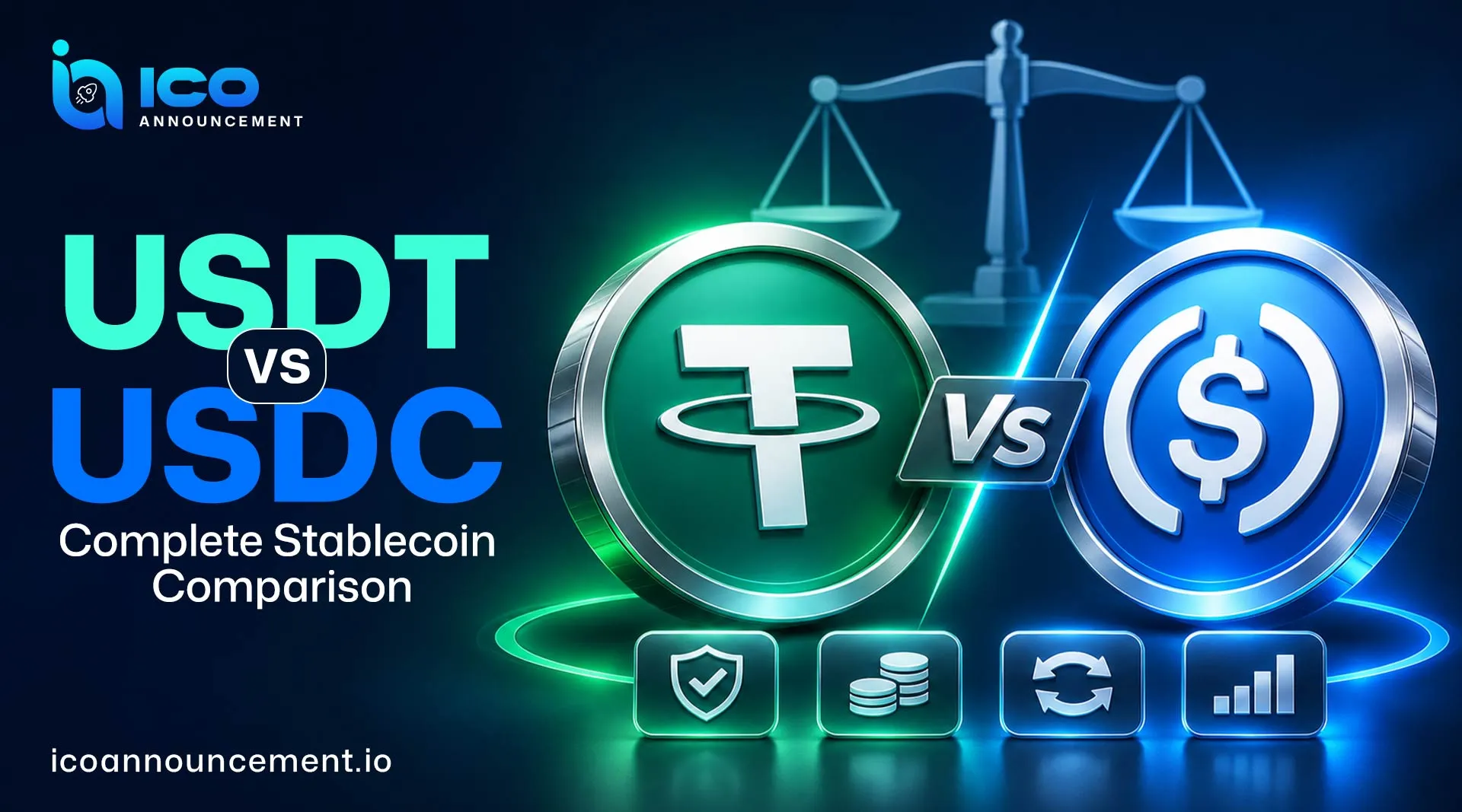
USDT vs USDC is the first question most people ask before sending dollars across borders in crypto. Both tokens aim to hold a one-dollar value, yet they differ in reserve reporting, market depth, and issuer rules. Neither is risk-free.
This guide compares reserves, depeg risk, fees, liquidity, and payment use so you can choose the coin that fits your transfer or cash-out instead of following a habit.
USDT vs USDC: What Is the Real Difference Between These Stablecoins?
Both are fiat-backed stablecoin tokens built to trade near one US dollar. Tether issues USDT and Circle issues USDC, and each issuer decides who can redeem directly. The real gaps sit in reporting frequency, market share, and platform support.
DefiLlama data placed USDT at roughly 60% of the total market in late 2026, which explains why it is the default on many exchanges and peer-to-peer desks. USDC has a smaller share but strong support on regulated platforms and in decentralized finance.
USDT vs USDC Reserves: Which Dollar-Backed Token Is More Transparent?
On reserve transparency, USDC reports more often. Circle publishes monthly reserve attestations, and its transparency page states that USDC is redeemable one-to-one for US dollars.
Reserves are held as cash deposits, short-term US Treasuries, and the Circle Reserve Fund managed by BlackRock, while Deloitte is Circle's independent auditor.
An attestation still covers one reporting date and is not a live view, so treat it as a regular checkpoint rather than a guarantee. You can read the latest figures on the Circle USDC transparency page before deciding how much to hold.
Is USDT Safer Than USDC? What Users Should Know About Depeg Risks
Is USDT safer than USDC? It depends on what you trust and need. Tether publishes quarterly attestations prepared by BDO. These reports have listed assets beyond Treasuries, including gold and bitcoin, and the excess reserve buffer has changed from quarter to quarter. An attestation is a snapshot, not a full audit.
Both coins face depeg risk, which can come from reserve doubts, banking stress, or heavy redemptions. Both issuers can also freeze addresses, so issuer controls matter for business wallets.
Review the Tether USDT reserves report and compare it with Circle's data. Avoid holding more of either coin than you could accept seeing a trade below one dollar.
USDT vs USDC Fees: Which Is Cheaper for Transfers and Payments?
The token itself rarely sets your stablecoin fees. The network does. A transfer on a low-cost chain can cost cents, while the same coin on a busy chain can cost far more, so check which networks your sender, receiver, and exchange support before choosing.
Exchange withdrawal fees and conversion spreads often cost more than the network charge. Compare these costs against bank rails in our crypto remittance fees comparison guide.
USDT vs USDC Liquidity: Which Stablecoin Is Easier to Convert?
USDT liquidity is hard to beat on global exchanges, especially in peer-to-peer trading and many emerging markets.
USDC is widely used on regulated platforms and in decentralized finance. For cash-outs, liquidity matters at the final step: you need a buyer or a bank route for the exact coin you hold.
Currency coverage matters too, and the Remittix supported fiat currencies article shows how one payment platform approaches it.
Best Stablecoin for Payments: Which Works Better for Businesses?
For companies, stablecoin redemption, reporting, and integration matter more than ticker preference. A merchant that settles in dollars wants predictable conversion, clear records, and wallet support.
USDC's monthly reporting suits teams that need documentation, while USDT suits counterparties who already hold it. Developers can see how checkout and fiat settlement fit together in this crypto payment API for businesses guide.
USDT or USDC for Cross-Border Payments: What Should Users Check?
Before any cross-border payments transfer, confirm five things: the network matches on both sides, the receiver accepts that coin, your country is supported, a redemption or cash-out route exists, and total fees are acceptable.
Availability differs by country and platform, so confirm your corridor first and send a small test amount. The Remittix supported countries guide shows how country coverage can limit a bank payout.
USDT vs USDC in 2026: Which Stablecoin Should You Pick for Payments?
Choose USDC if frequent reserve reporting and regulated-platform access come first. Choose USDT if you need the deepest liquidity or your recipient only accepts it. Many users hold both and convert as needed.
Whichever you pick, check the network and issuer pages every time. To see how stablecoin rails connect to bank payouts, read the Remittix payment network explained article.
Disclaimer: This article is for information only and is not financial, investment, or legal advice. Stablecoins can lose their dollar peg, and rules differ by country. Verify details on official issuer pages and do your own research before sending funds.